


Olive extracts are leaving the EU feed additive register: what it means, and how to prepare
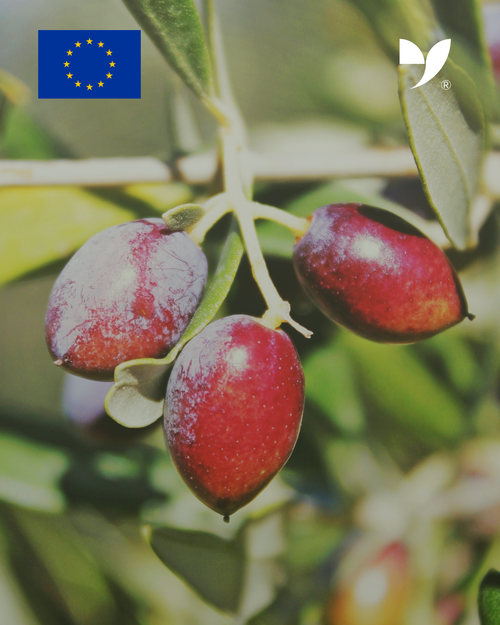
Why the olive is returning to its whole form
Olive extract and olive leaf extract will no longer be authorized as feed additives in the EU, for any animal species, under Commission Implementing Regulation (EU) 2025/2575. The olive is not leaving animal nutrition, but the way we use it is changing. Here is what you need to know, and how to prepare with confidence.
|
Key takeaways
|
Why olive extracts are being withdrawn as EU feed additives
Adopted on 18 December 2025, Regulation (EU) 2025/2575 withdraws a list of feed additives from the EU market [1]. Among them is the entry for olive extract and olive leaf extract from Olea europaea L., listed with the botanically defined flavoring and appetizing substances and withdrawn for all animal species.
It is important to read this decision for what it is. Olive extract and olive leaf extract are being withdrawn because the applications required for their re-evaluation were not submitted. It is not a conclusion that olive-derived products are unsafe. But once the transition periods end, these extracts can no longer be marketed or used under their former additive authorization [1].
For many nutritionists, olive extracts have been familiar botanical ingredient in feed formulations for many years.Change like this can feel unsettling, especially when such ingredients are well established in existing formulations. We want to help you understand the timeline clearly and plan ahead calmly.
When do olive extracts have to be removed from feed?
The phase-out happens in three stages, giving the market time to adapt [1]:
-
8 January 2027: existing stocks of the additives may no longer be placed on the market or used.
-
8 April 2027: premixtures produced with them may no longer be placed on the market or used.
-
8 January 2028: compound feed and feed materials produced with them, or with those premixtures, may no longer be placed on the market or used.
The first deadline is only around three months away. Formulations reviewed now will make the transition smoother for your mills, your customers and your animals.
EU rules for botanical feed additives are changing
This withdrawal is part of a much larger re-evaluation. The EU program originally involved more than 800 feed flavoring additives, and the FEFANA Feed Flavoring Authorization Consortium submitted 58 dossiers covering 858 substances [6]. Where no dossier was maintained, entries are now being phased out: the Annex of Regulation 2025/2575 alone lists around 50 flavoring entries, including the olive entry [1].
For the botanicals that are re-authorized, the conditions of use are becoming increasingly precise. Instead of one broad authorization for all species, recent regulations may set different maximum levels per species and category, detailed compositional specifications, compulsory analytical methods, rules on premixtures and drinking water, user-protection measures and conditions for use alongside other additives. Two recent examples show what this means in practice:
-
Basil tincture (Regulation (EU) 2026/1786) is authorized as a sensory additive, with species-specific maximum inclusion levels ranging from 65 mg/kg of complete feed for chickens for fattening to 500 mg/kg for ornamental fish and several different limits in between. For formulators, this means that the permitted level must be checked against each target species, which can quickly become complex when managing formulas and labels across a broad product portfolio. In addition, because basil tincture contains methyleugenol and estragole, its use with other additives is only permitted if the levels of these substances in the feed stay below the applicable limits [2].
-
Rosemary extract (Regulation (EU) 2024/1068) is authorized as a technological antioxidant for cats and dogs, with maximum carnosic acid levels of 5 and 34 mg/kg of complete feed respectively. When different sources of carnosic acid are used together, their combined contribution must remain below the maximum level permitted for the relevant species [3]. In practice, formulators therefore need to identify all ingredients contributing carnosic acid to the formula, notably rosemary (Rosmarinus officinalis) and sage (Salvia officinalis), as well as other Salvia species that may contain this compound.
For formulators, every additional limit means another calculation across the complete formulation, especially when supplying several species and markets. This is one reason why we see growing interest, particularly in France, in plant powders and well-characterized raw materials standardized in naturally occurring compounds.
Feed material or feed additive?
The European Commission's Recommendation 2011/25/EU offers guidance on where the line sits [4]. Whole plants, plant parts and products of limited physical processing, such as crushing, grinding or drying, generally point toward feed-material status. Specifically extracted, purified or standardized preparations intended mainly to perform an additive function are more likely to fall under the feed-additive framework. Each product is assessed case by case, looking at its manufacturing process, composition, degree of purification, intended function and use.
Feed materials do not need an individual EU authorization or periodic renewal. That does not mean less care. They must still meet the requirements for safety, traceability, labelling, botanical purity, composition and control of undesirable substances, and a product may only carry a description from the EU Catalogue of Feed Materials if it meets that entry’s requirements [5].
The whole olive, still within reach
The olive is not leaving animal nutrition. It is returning to its whole form: physically processed whole-olive products, such as Herbonis olive pulp, may qualify as feed materials rather than feed additives. Herbonis olive pulp comes from olive-oil production and is obtained through physical processing only: mechanical separation, drying and milling, with no solvent extraction and no isolation of individual compounds. It therefore follows the feed-material route rather than the additive route.
What remains is the olive totum, kept as nature made it: more than 40 naturally occurring bioactives from Greek Koroneiki olives, including phenolics such as hydroxytyrosol and tyrosol and triterpenes such as maslinic acid and squalene. And like everything we do at Herbonis, it rests on careful science:
-
Standardized composition, with specifications for naturally occurring phenolic and triterpenic markers
-
A controlled, traceable supply chain, from Greek groves to finished material
-
Demonstrated biological effects, from cellular studies to animal trials, supporting the animal's own antioxidant defenses
For feed manufacturers currently using olive extracts, this is a timely moment to review formulations..
Listen and talk to us
In our latest podcast episode of "Beyond the Feed", we explain what the withdrawal means in practice and why the market is moving toward standardized plant raw materials. [Listen to the episode: podcast link]
"This isn't a safety decision. And the olives aren’t leaving animal nutrition. We now need to use olive totum instead of olive extracts."
Q& A with our expert Clémence Messant
Clémence Messant, Product Development Manager at Innovad Group (picture)
-
Is olive extract banned in animal feed in the EU?
Olive extract and olive leaf extract are being withdrawn from the EU register of feed additives under Commission Implementing Regulation (EU) 2025/2575. This applies to all animal species. It is a withdrawal of authorization rather than a ban on safety grounds. After the transition periods end, the extracts can no longer be marketed or used as feed additives.
-
Is olive extract unsafe for animals?
No. The withdrawal is not a conclusion that olive-derived products are unsafe. Olive extract and olive leaf extract are being withdrawn because the applications needed for their re-evaluation were not submitted or were later withdrawn.
-
Can existing stocks of olive extract still be used?
Yes, but only for a limited time. Existing stocks of the additives can be placed on the market and used until 8 January 2027. Premixtures made with them can be used until 8 April 2027. Compound feed and feed materials made with them, or with those premixtures, can be used until 8 January 2028.
-
Can olive pulp be used as a feed material?
Whole-olive products obtained through physical processing only may qualify as feed materials rather than feed additives. Physical processing here means steps such as mechanical separation, drying and milling. Herbonis olive pulp is produced this way, without solvent extraction or isolation of individual compounds. Feed materials don't need an individual EU authorization, but they must still meet EU requirements for safety, traceability, labelling and composition.
-
Which other flavoring additives are affected by Regulation 2025/2575?
The Annex of Regulation (EU) 2025/2575 lists around 50 botanically defined flavoring entries that are being withdrawn, including olive extract and olive leaf extract. These are entries for which no dossier was maintained during the EU re-evaluation of feed flavorings.
Reviewing your formulations? Our team is here to guide you through the transition and help you find the right approach for your animals.
Contact Clémence Messant, Product Development Manager at Innovad Group.
Sources
-
Commission Implementing Regulation (EU) 2025/2575 of 18 December 2025 withdrawing from the market certain feed additives, OJ L, 19.12.2025. http://data.europa.eu/eli/reg_impl/2025/2575/oj
-
Commission Implementing Regulation (EU) 2026/1786 (basil tincture from Ocimum basilicum L.). https://eur-lex.europa.eu/legal-content/EN/TXT/HTML/?uri=OJ:L_202601786
-
Commission Implementing Regulation (EU) 2024/1068 (rosemary extract for cats and dogs). https://eur-lex.europa.eu/legal-content/EN/TXT/HTML/?uri=OJ:L_202401068
-
Commission Recommendation 2011/25/EU of 14 January 2011 establishing guidelines for the distinction between feed materials, feed additives, biocidal products and veterinary medicinal products. https://eur-lex.europa.eu/eli/reco/2011/25/oj
-
Commission Regulation (EU) No 68/2013 on the Catalogue of feed materials. https://eur-lex.europa.eu/eli/reg/2013/68/oj
-
Food & Agribusiness World, "Group back re-authorisation of feed flavouring additives". https://www.foodagribusiness.world/feed/group-back-re-e2-80-90authorisation-of-feed-flavouring-additives